
Opinion: Utah’s initiative process is not broken — Vote no on Amendment B
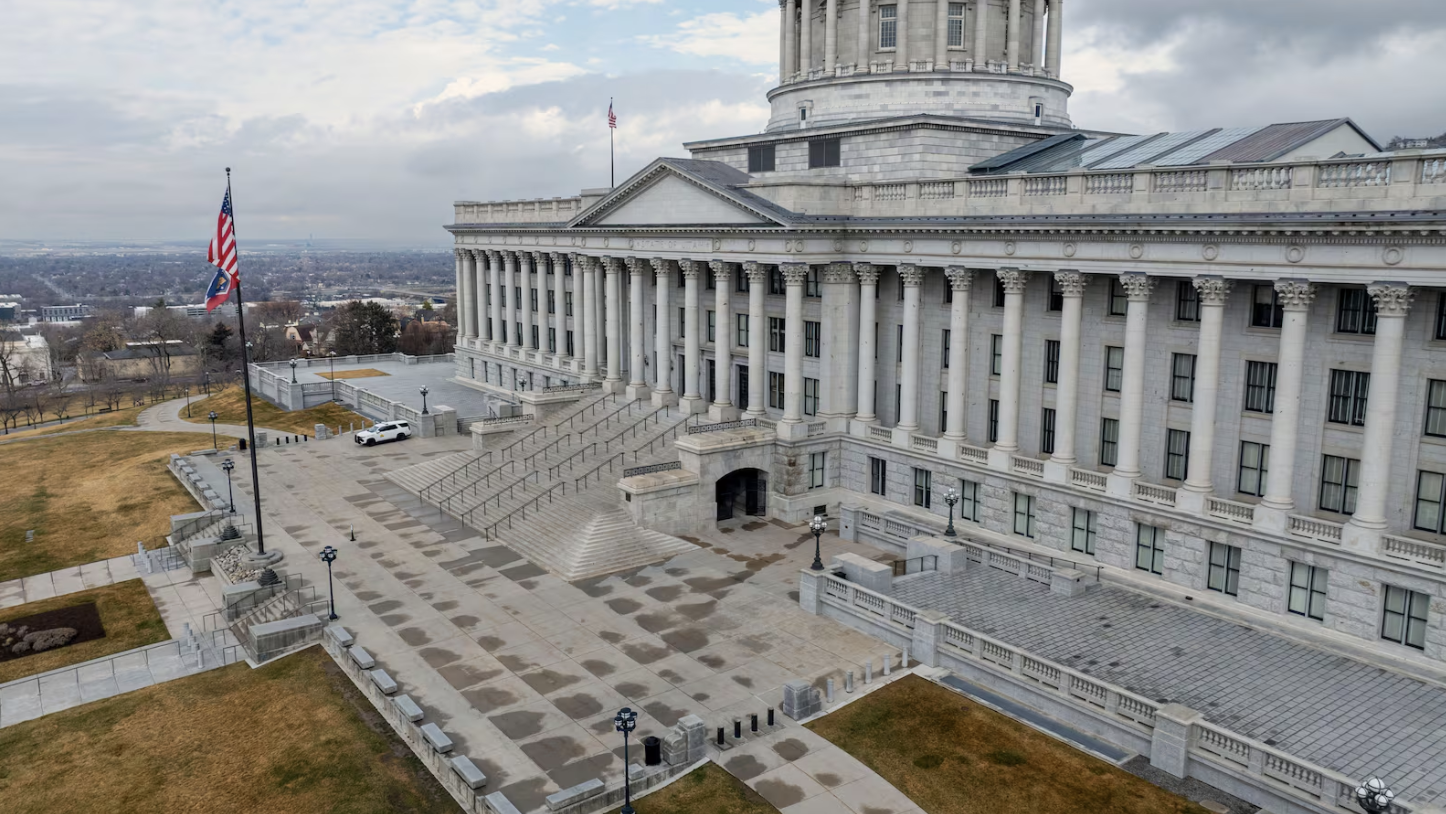
The Utah Capitol in Salt Lake City on Monday, March 2, 2026. Scott G Winterton, Deseret News
October 8, 2026 | Deseret News, The (Salt Lake City, UT)
By Karen Crompton, Dixie S. Huefner
Dixie is a Professor Emerita from the University of Utah Department of Special Education, where she focused primarily on learning disabilities and special education law. Karen has a long history of service to the community, including being the former Executive Director of Voices for Utah Children and subsequently the Salt Lake County Director of Human Services. They both serve on the Steering Committee of the Utah Citizens' Counsel.
Proposed constitutional Amendment B on the upcoming November ballot deserves a “No” vote. The people’s right to pass a citizen initiative by majority vote is a core part of representative democracy, embedded in Article VI, Section 2 of the Utah Constitution and has served Utahns well for over 100 years.
Amendment B would require that voters approve by a 60% supermajority any citizen initiative that has the effect of raising taxes on any, some, or all state taxpayers. You can read the cumbersome language in the notice published every day in the newspaper.
The initiative right in the Utah Constitution is not broken
Any proposed amendment should fix a problem in the existing constitution. The current requirement for a simple majority does not need a new threshold for initiatives with tax implications. The initiative process has been invoked over the years only when the legislature has not passed a law desired by significant numbers of registered voters. According to Ballotpedia, initiatives have been on the Utah ballot only 28 times since their introduction in 1900; only seven have succeeded. Voters have often defeated what they see as undesirable initiatives.
The legislature has already enacted many statutory limitations on the initiative process. For instance, a statewide initiative currently requires signatures equal to at least 8% of active voters statewide and 8% in at least 26 of 29 State Senate districts. Sponsors must publish a fiscal-impact statement and hold at least seven public hearings across specified regions of the state before circulating statewide signature petitions, with strict requirements for signing and for signature gatherers. A misdemeanor penalty is attached for individual noncompliance. Time limits for gathering signatures have been shortened over time.
Amendment B would centralize more power in the legislature
It further unbalances power between the legislature and Utah citizens. The legislature has already made clear that it does not like citizen initiatives, which interfere with legislative control. But the Utah Constitution Article I, Section 2 states explicitly that “all political power is inherent in the people” and “they have the right to alter or reform their government,” specifically by initiative and referendum processes in the Constitution itself.
In a representative democracy, requiring a supermajority of voters is unusual and invites public anger and reduced trust in the legislature. Our legislature needs only a majority for its own taxing decisions, and ironically, proposed Amendment B itself needs only be approved by a simple majority of voters.
Moreover, given recent legislative disdain of initiatives, Amendment B’s passage is likely to encourage more legislative hurdles to initiative rights and more efforts to shift the balance of power to itself.
The back story of Amendment B is important to understand. Reacting to gerrymandered congressional boundaries that overwhelmingly favored one specific political party, citizens in 2018 proposed an initiative creating an Independent Redistricting Commission (IRC) to submit neutral map boundaries for legislative adoption — not drawn to favor any specific political party.
The initiative, entitled Proposition 4, passed on the 2018 ballot by a simple majority. The Legislature basically repealed the initiative, passing legislation that eliminated the neutral criteria and eroded the IRC role.
After several years of legal wrangling in the lower courts, the Utah Supreme Court upheld Proposition 4, ruling that it was unconstitutional for the Legislature to repeal a citizen initiative that altered or reformed Utah’s government unless there was a compelling state interest in doing so. The Legislature did not meet this requirement.
Since then, the Legislature has been trying to limit initiative rights both by statute and constitutional amendment. It failed in its attempt to place a constitutional amendment on the 2024 ballot that would have allowed legislative repeal of any citizen initiative. The ballot description contained misinformation and did not meet notification requirements.
This year’s proposed Amendment B is another approach to weakening citizen initiatives by requiring a higher percentage vote threshold for some initiatives than for legislation that originates with the legislature. It is not as innocent as it may seem.
The people’s initiative power is not a guarantee that every proposal will pass. It is a guarantee that voters can make the decision. Proposed Amendment B would weaken that guarantee and deserves a “no” vote.